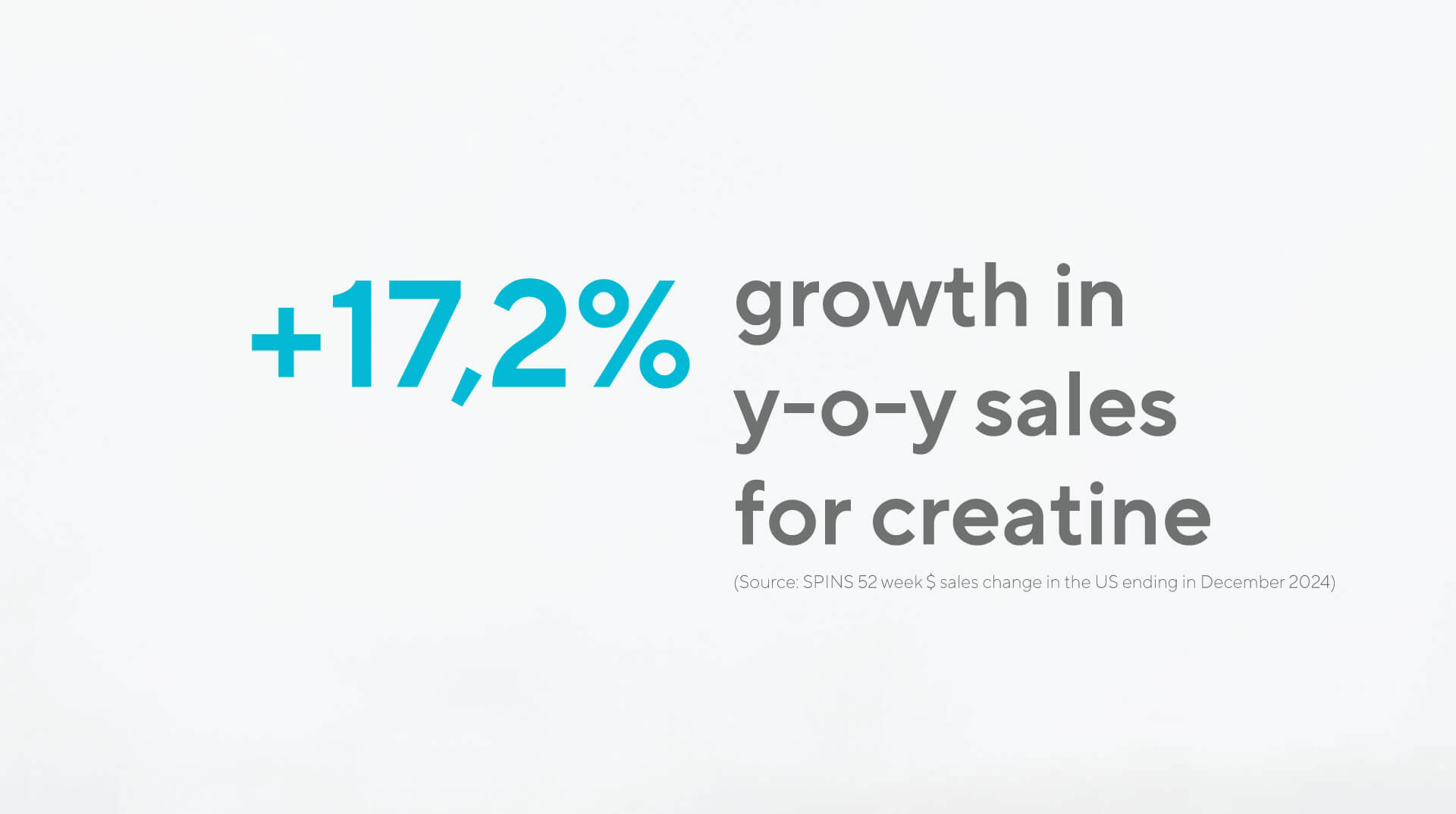
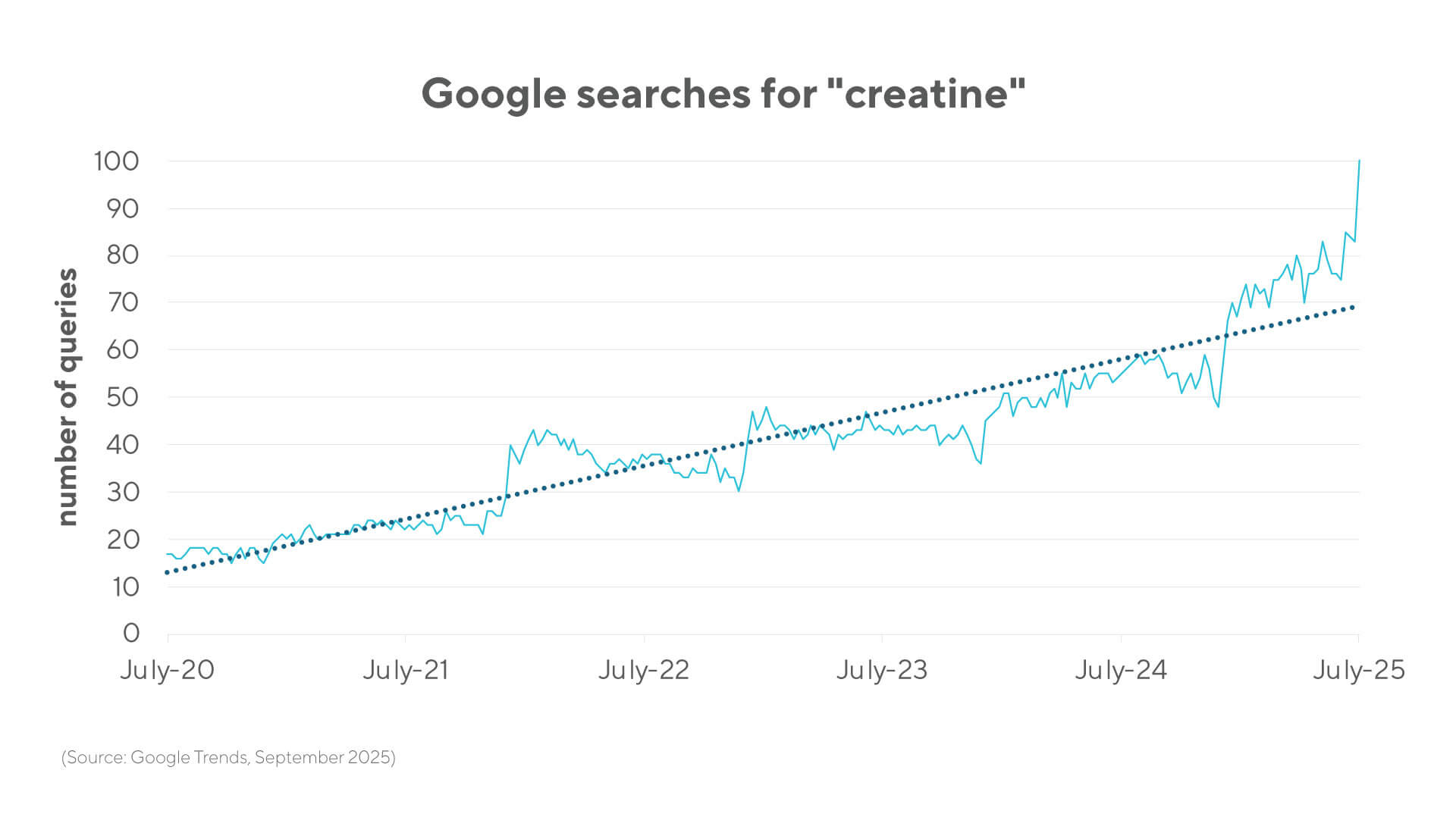
Research shows that, while the popularity of the ingredient grows, 65,2% of the population is not consuming enough dietary creatine, and a downward trend has been observed. Creatine malnutrition is linked to several health risks, such as fatigue, brain fog, poor mental health, depression, and heart/liver conditions, making it increasingly considered a semi-essential nutrient.
While remaining a cornerstone of sports nutrition, creatine is moving into wider health and wellness categories. Its health applications include increased muscle mass and strength, enhanced recovery, support for cognitive function (including memory, problem-solving, and brain metabolism), assistance with aging and sarcopenia by helping maintain muscle in older adults, blood glucose regulation when combined with exercise, and potential for improving health outcomes for muscular dystrophy, depression, and anxiety. Brands are already starting to communicate these benefits with new product launches and marketing campaigns. In September 2025, Thorne, for example, launched a campaign highlighting the ingredient’s benefits beyond performance, featuring the musician Ciara.
Creatine is generally considered safe for long-term use in healthy individuals, despite persisting myths about kidney harm. It is also approved by EFSA, which makes it easier for brands to communicate its benefits.